2 December 2025,
Tuesday


2 December 2025,
Tuesday

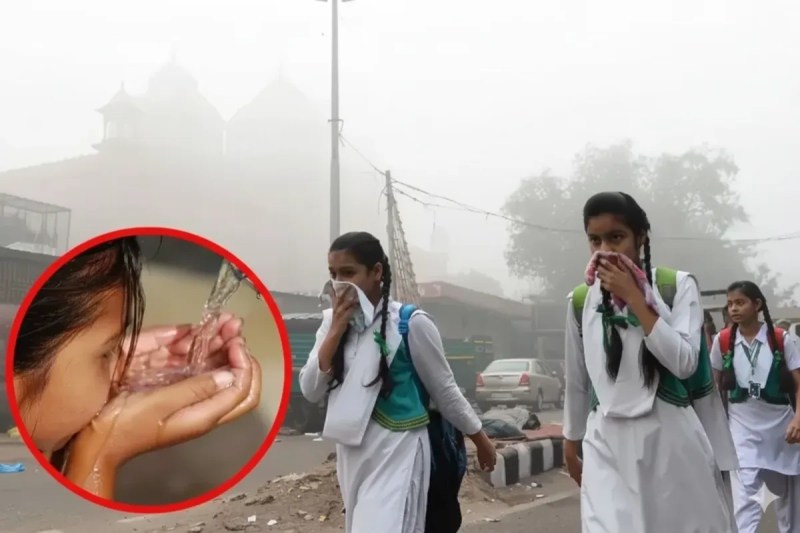
Image: Patrika
Delhi CPCB Report: Alarming revelations are emerging regarding Delhi's air and water. Both water and air are essential for human survival. While Delhi's polluted air remains a constant topic of discussion, with the average AQI failing to decrease, a recent report has also raised questions about the quality of Delhi's water. The figures in this report are startling and could pose significant problems for the residents of Delhi. A new report by the Central Pollution Control Board (CPCB) has brought to light several serious concerns about the quality of Delhi's groundwater. The report indicates a rapid increase in the levels of hazardous metals such as uranium, lead, nitrate, and fluoride in Delhi's groundwater. According to the report, Delhi ranks third in the country for high uranium content, a situation that could prove dangerous for public health.
The report states that in some areas, the concentration of metals and chemicals in the water was found to be significantly higher than the prescribed standards. Consuming such water can lead to kidney failure, impact child development, and increase the risk of cancer. Out of 135 samples tested, 33% showed excessive electrical conductivity, 24% had high nitrate levels, and 51% contained high RSC (Residual Sodium Carbonate). Meanwhile, on Saturday, there was no significant change observed in Delhi's AQI levels. The AQI was recorded at 372 in Dhaula Kuan, while Anand Vihar and Ghazipur registered 358. ITO also did not show favourable conditions, with an AQI of 345 recorded. The AQI in all these locations fell under the 'very poor' category.
The AQI situation in Delhi continues to be grim. On Saturday morning at 8 AM, Delhi's average AQI was recorded at 335, which falls under the 'very poor' category. During this period, Mundka recorded an AQI of 359, Bawana 360, Jahangirpuri 356, Wazirpur 348, Rohini 362, DTU 351, Anand Vihar 350, Punjabi Bagh 352, Narela 389, Noida 340, Greater Noida 316, Ghaziabad 326, Gurugram 286, and Faridabad recorded an AQI of 210. While Gurugram and Faridabad had AQI in the 'poor' category, other areas were marked as 'very poor'. Experts suggest that due to weak winds and dropping temperatures, no significant improvement in pollution levels is expected in the next six days.
Experts opine that the persistent poor air quality in Delhi is not merely a seasonal issue but a consequence of systemic flaws. A recent report by CSE (Centre for Science and Environment) has termed it a 'public health crisis'. According to CSE, the primary sources of PM2.5 in Delhi are local. Transportation contributes 39%, industries and construction units contribute 20%, and dust on roads accounts for 18%. Experts point out that while stubble burning has an impact in November, local sources are consistently responsible for the rise in pollution in Delhi.
According to a recent report by Climate Trends, Delhi has been the most polluted city in the country for nearly a decade. An analysis of reports from 2015 to 2025 indicates that Delhi records the highest pollution levels annually. Although a slight improvement was observed in 2020, the average AQI remained around 180 in 2025, which is still far from the safe limit. Experts attribute this to traffic congestion on roads, industrial emissions, lower temperatures in winter, and stubble burning around Indira Gandhi Maidan. Scientists from the meteorological department state that during winters, the geographical positioning of the Himalayas traps pollutants in the air. The combination of lower temperatures and reduced wind speed exacerbates the situation during this period.
Big News
View AllNew Delhi
Delhi
Trending